



Sterile Solutions and IV Supplies for Skilled Nursing, DME, and Home Care Providers
Geriatric Medical supplies sterile solutions in wholesale volumes to skilled nursing facilities, long-term care communities, DME/HME providers, and home infusion and home care agencies nationwide. Our catalog includes solutions for infusion, injection, irrigation, and respiratory use, so your nursing and respiratory teams can source sterile water, saline, and IV fluids alongside the rest of your clinical supplies from one distributor.
Whether you're stocking irrigation solutions for wound and catheter care, sterile water for respiratory equipment, or IV fluids for residents receiving infusion therapy, our team can help you find the right solution types, container sizes, and quantities for your care setting.
Sterile Solution and IV Questions from Providers
What sterile solutions and IV products does Geriatric Medical carry?
We carry infusion solutions, injection solutions, irrigation solutions, and respiratory solutions, including sterile water and sodium chloride in a range of container types and sizes. For respiratory equipment and supplies, see our respiratory and trach care category.
What's the difference between solutions for irrigation, injection, infusion, and inhalation?
Sterile solutions are manufactured, tested, and labeled for a specific route of use, and they aren't interchangeable. Irrigation solutions are used to rinse wounds, catheters, and body cavities and must never be injected or infused. Injection solutions are used to dilute or reconstitute medications or for injection. Infusion solutions, commonly called IV fluids, are given intravenously. Inhalation and respiratory solutions are used in nebulizers and humidification equipment. Always check the label to confirm a solution is indicated for its intended use.
Should we use sterile water or sterile saline for irrigation?
Sterile 0.9% sodium chloride (normal saline) is the most common choice for wound irrigation and cleansing because it's gentle on tissue. Sterile water is also used for certain irrigation purposes. The appropriate solution depends on the procedure and should follow the prescriber's order and your facility's protocol, such as a wound care or catheter care order.
How long can a sterile irrigation solution be used after it's opened?
Once a sterile solution container is opened, it's no longer guaranteed to be sterile. Many facilities date and time opened irrigation containers and discard them within 24 hours, but the exact limit should follow the product labeling and your facility's infection control policy. Choosing container sizes that match typical use, such as smaller bottles for single wound changes, helps reduce waste from discarded solution.
What solutions are used for respiratory equipment?
Respiratory solutions include sterile water for use in oxygen humidifiers and heated humidification systems, and sterile saline for inhalation, often in single-dose vials, used with nebulizers. Prefilled sterile humidifier bottles are also commonly used with oxygen equipment. Sterile solutions labeled for respiratory use should be used rather than tap or non-sterile water, and containers should be replaced according to the product labeling and your facility's policy.
What are the most common IV fluids used in long-term care?
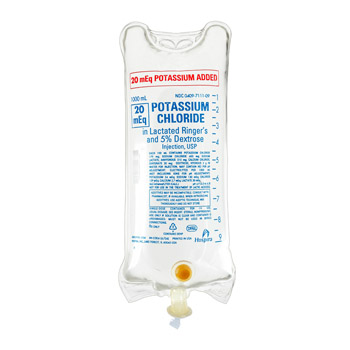
Common IV fluids include 0.9% sodium chloride (normal saline), lactated Ringer's solution, and dextrose solutions such as dextrose 5% in water. In long-term care and home infusion, IV fluids are often used for hydration and as diluents for IV medications. IV fluids are prescription products, and the type, volume, and rate are determined by the prescriber's order.
What's the difference between bacteriostatic and sterile water or saline for injection?
Sterile water and sterile saline for injection are preservative-free and are typically single-dose products, so any remaining solution should be discarded after use. Bacteriostatic water and bacteriostatic saline contain a preservative, usually benzyl alcohol, that inhibits bacterial growth and allows multiple withdrawals from the same vial according to the labeling. Some medications must be reconstituted with a specific diluent, so check the medication's instructions before choosing one.
Do we need a license to purchase IV solutions?
Some sterile solutions, including many IV fluids and injection solutions, are prescription products that can only be sold to licensed healthcare facilities, practitioners, and other authorized purchasers. Distributors are generally required to verify a customer's license before selling prescription products. If you're setting up a new account to purchase these products, our team can let you know what documentation is needed.
How should sterile solutions and IV fluids be stored?
Most sterile solutions and IV fluids should be stored at controlled room temperature and protected from freezing and excessive heat, according to the product labeling. IV bags that come in a protective overwrap should be kept in the overwrap until use, and each product's expiration date should be checked before use. Rotating stock so the oldest lots are used first helps reduce expired inventory.
Can we order sterile solutions and IV products through EDI or a punchout catalog?
Yes. Geriatric Medical supports EDI ordering and punchout catalog integration for accounts that manage purchasing through their own procurement, EHR, or ERP systems, so sterile solutions and IV products can be ordered the same way as the rest of your catalog without manual re-entry.